Surat’s Most Unique Ganesh Installation: Floating Lighthouse-Themed Mandap on Tapi River Captivates Devotees
Surat, August 2025: Ganesh Chaturthi in Surat has once again arrived with grandeur, devotion, and cultural vibrancy. This year, over 80,000 Ganesh idols have been installed across homes, societies, and public mandaps. The city resonates with chants of “Ganpati Bappa Morya”, while crores of rupees are being spent on elaborate decorations, grand lighting, and theme-based celebrations. Alongside this spectacle, one installation has emerged as a symbol of uniqueness and devotion—an idol of Lord Ganesha enshrined inside a floating pavilion on the Tapi River.
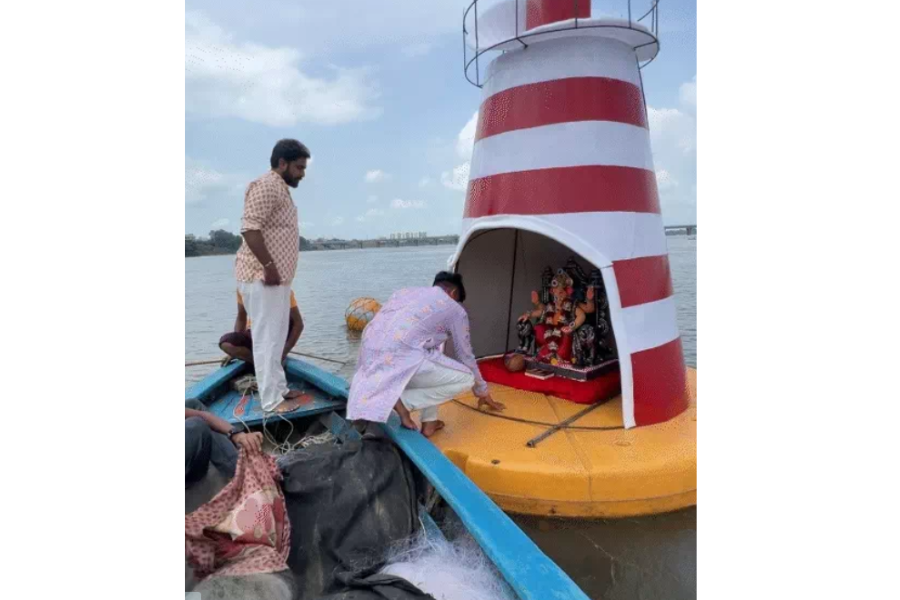
In Surat’s Rander area, a group of youths decided to go beyond traditional neighborhood pandals. They constructed a floating mandap in the middle of the river, shaped as a replica of a lighthouse (divadandi). Within this creative structure, Lord Ganesha has been installed. Every morning and evening, devotees travel by boat to perform aarti, sing devotional hymns, and participate in group prayers. Unlike many idols that are immersed directly into the river, this idol will be brought ashore on Anant Chaturdashi and immersed respectfully within the community premises.
A Tradition Born from a Calamity
The roots of this tradition go back to 2006, when Surat faced one of the most destructive floods in its history due to the overflowing Tapi. Remembering the devastation, the Panch Pipda Maholla Ganesh Mandal decided in 2007 to begin installing Ganesh idols directly in the river as a prayer for protection. Since then, the mandal has continued the practice annually, with only a two-year pause during the COVID-19 pandemic.
Ajaybhai Selar, a member of the mandal, explained:
“After the terrible flood of 2006, our community believed Lord Ganesha’s blessings were necessary for Surat’s safety. Since 2007, we have been placing Bappa in the Tapi every year. It is not just worship, but a reminder of resilience and faith.”
From Boats to a Floating Lighthouse
The designs of the floating mandap have evolved over time. Last year, the idol was placed on a decorated boat. This year, the mandal designed an even more striking concept—a sturdy fiber platform shaped like a lighthouse. On this floating lighthouse, the idol has been installed, glowing majestically as lights reflect on the river’s surface at night.
The sight of this illuminated structure in the middle of the Tapi, coupled with devotional songs and the sound of bells from the aarti, has created an atmosphere that draws hundreds of curious onlookers and worshippers alike.
Daily Worship on the River
Throughout the ten-day festival, members of the mandal travel by boat twice a day to perform rituals. Morning and evening aartis are accompanied by devotional music, chanting, and the distribution of prasadam. Spiritual storytelling sessions are also organized to engage the community, blending entertainment with religious inspiration.
A local devotee expressed amazement:
“It is difficult to imagine such dedication. Performing worship in the middle of the river every day is not easy, but these youths are doing it with joy and commitment. It inspires us all.”
A Distinct Immersion Tradition
Most idols across Surat are immersed either along the Tapi’s banks or in the Arabian Sea. However, the Panch Pipda Maholla Ganesh Mandal follows its own distinctive path. After the ten days of worship, the idol is carefully brought back from the floating platform and then immersed within the mandal’s premises onshore.
This unique practice not only prevents large-scale environmental impact on the river but also strengthens the community’s emotional connection to their beloved Bappa. The farewell procession, though smaller in scale compared to citywide immersions, carries deep personal significance for the members and devotees involved.
A Cultural Highlight for Surat
In a city already renowned for its extravagant Ganesh Chaturthi celebrations—complete with massive pandals, dazzling lights, and social service initiatives—this floating mandap has carved its own identity. It demonstrates how devotion can spark creativity and how traditions can adapt to reflect both faith and environmental awareness.
The floating lighthouse serves as more than just a mandap; it symbolizes hope and guidance, much like a real lighthouse guiding ships to safety. For devotees, the image of Lord Ganesha seated upon a glowing divadandi in the middle of the Tapi is both a spectacle and a spiritual experience.
As chants of “Ganpati Bappa Morya” echo across the river, this unique installation stands out as one of Surat’s most innovative and memorable tributes to Lord Ganesha—blending history, faith, resilience, and artistry into a celebration that the city will long remember.


