Gayatri Mantra and Folk Songs Welcome PM Modi in Japan: Focus on 4 Key Agendas During Tokyo Visit
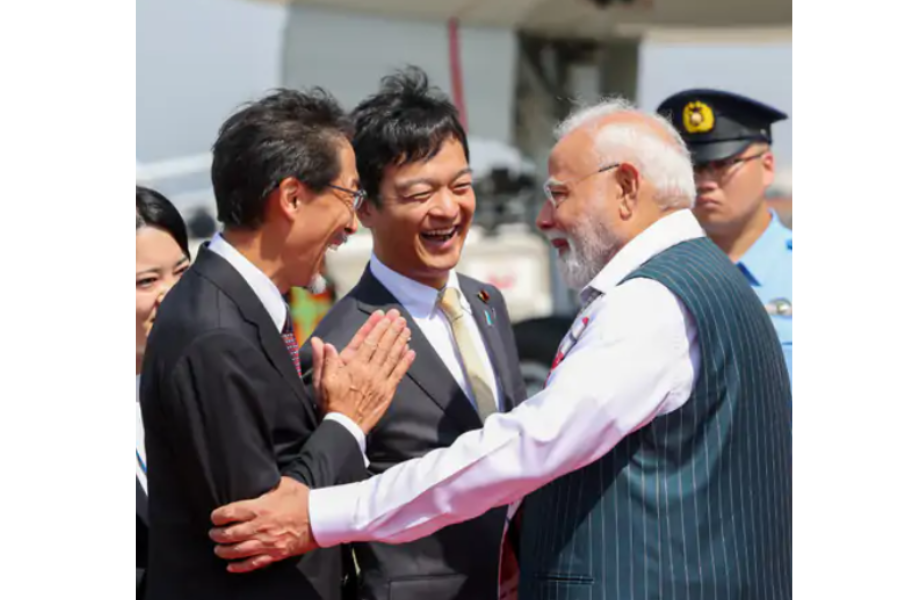
Tokyo, August 2025: Prime Minister Narendra Modi arrived in Japan on Thursday morning for a two-day official visit, marking his eighth trip to the country as India’s head of government. On arrival at a Tokyo hotel, he was given a warm and culturally rich reception by local artists. The welcome featured the chanting of the Gayatri Mantra alongside devotional hymns, followed by a special rendition of the Rajasthani folk song “Padharo Mhare Desh” sung by a Japanese woman. The symbolic gesture highlighted the deep cultural connection and admiration for Indian traditions in Japan.
The Prime Minister also took the opportunity to meet members of the Indian diaspora (NRIs) in Japan shortly after his arrival. Addressing the gathering, he emphasized the role of overseas Indians as vital partners in strengthening the bilateral relationship.
India-Japan Annual Summit
Modi’s visit comes on the occasion of the 15th India-Japan Annual Summit. The high-level conference will focus on strengthening strategic and economic cooperation between the two countries. Over the years, this summit has become a key platform for dialogue, covering areas such as defense, trade, investment, and technology.
In a message shared on social media before his departure, PM Modi stated:
“During this visit, our discussions will focus on deepening the Special Strategic and Global Partnership between India and Japan. Together, we aim to strengthen cooperation across multiple sectors for peace and prosperity in the region.”
This summit holds additional importance as Japan has been one of India’s closest allies in Asia, both strategically and economically. It is also worth noting that former Prime Minister Manmohan Singh had visited Japan three times, whereas Modi’s current trip makes it the eighth such visit under his leadership.
Key Agendas of the Visit
PM Modi’s discussions with Japanese Prime Minister Shigeru Ishiba are expected to revolve around four major themes: security, defense, trade, and technology. The two leaders will engage in detailed bilateral talks, followed by a formal dinner.
Beyond the summit, Modi will also tour industrial facilities in Japan. On August 30, he is scheduled to visit a factory in Miyagi that manufactures coaches for Japan’s iconic bullet trains. This visit is seen as significant given India’s ongoing Mumbai-Ahmedabad High-Speed Rail project, popularly known as the Bullet Train project, which relies on Japanese technology and expertise.
Japanese Investment in India
According to reports in Japanese media, Tokyo is preparing to announce a massive investment package of nearly 10 trillion yen (approximately ₹5.93 lakh crore) into India. The investment is expected to target sectors including infrastructure, clean energy, high-speed rail, and digital technologies. Such a financial commitment would further solidify Japan’s role as one of India’s largest and most reliable economic partners.
Analysts believe this investment package will provide a substantial boost to India’s economy, especially at a time when global trade relations remain uncertain.
Global Context
The timing of Modi’s Japan visit also carries significant geopolitical weight. Recently, U.S. President Donald Trump announced a decision to impose a 50% tariff on certain Indian exports, a move that could have implications for India’s trade balance. In this backdrop, strengthening India’s partnerships with Asian allies like Japan becomes even more crucial.
By reinforcing ties with Tokyo, New Delhi aims to diversify its trade and investment base, reduce dependency on Western economies, and expand its influence in the Indo-Pacific region. Japan, for its part, views India as a critical partner in maintaining regional stability and counterbalancing the rise of other regional powers.
Strengthening Bonds Beyond Politics
While strategic discussions dominate the headlines, Modi’s cultural reception in Tokyo also reflects the softer side of diplomacy. The chanting of the Gayatri Mantra and the Rajasthani folk song performance underscored how Indian culture has found admiration and resonance in Japan. Such gestures are often seen as symbolic bridges that deepen people-to-people connections between nations.
As the 15th India-Japan Annual Summit unfolds, the outcomes of this visit are expected to strengthen bilateral cooperation across multiple domains. With large-scale investments on the horizon and discussions covering defense, trade, and technology, Modi’s trip to Japan is poised to become a landmark moment in India’s foreign policy journey.


