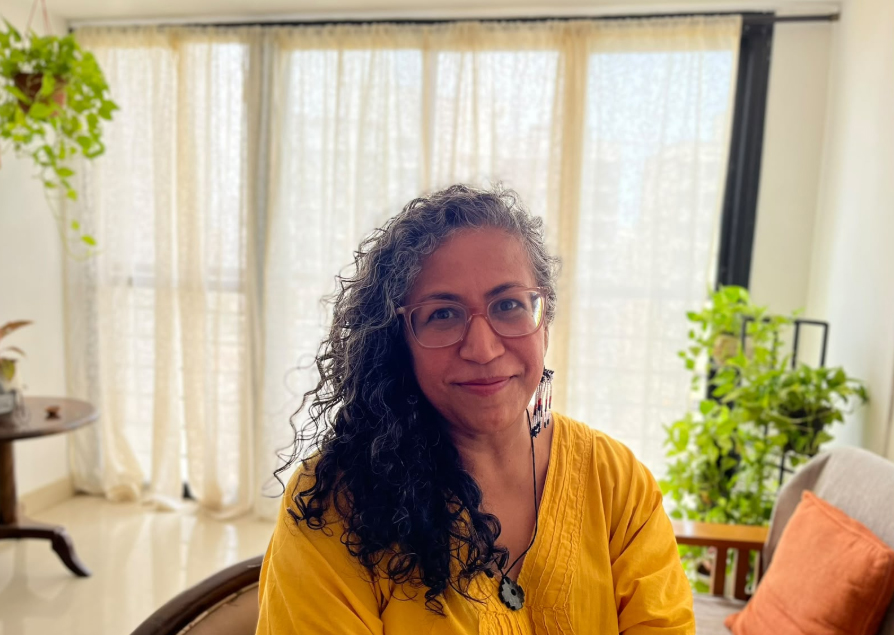
Mumbai (Maharashtra) [India]: Some journeys begin with a clear destination in mind. Others take shape slowly, through experiences that change the way a person sees life. For Swati Mishra, the path to healing began long before she created AyniWasi. It grew through loss, change, self-exploration and more than two decades of learning, eventually becoming the foundation of the work she does today.
Born and raised in Lucknow, Swati experienced loss early in life. She lost her father when she was seven and later lost a close childhood friend to cancer when she was 20. Those experiences brought an early awareness of grief, uncertainty and the questions that can remain after life changes unexpectedly.
At 16, she began working, and at 25, she left a fashion design course midway and moved to Mumbai. There, she started again as an assistant costume designer in television. Another important chapter began in 2002, when she encountered Reiki during her pregnancy with her son.
What began as a personal experience gradually became a much deeper exploration.
Over the following years, Swati studied and experienced different approaches to healing, including Reiki, energy medicine, meditation, metaphysics, hypnotherapy and shamanic healing. But the most important part of that process was not collecting different practices. It was understanding herself.
A defining moment came in 2010 during her hypnotherapy training. While exploring memories from childhood, Swati encountered a younger version of herself during meditation. She began referring to that six-year-old girl as Gauri.
What followed became a long process of reconnecting with parts of herself that had been shaped by grief, loneliness, fear and the belief that she had to face life on her own.
Gauri eventually became more than a memory. She became a way for Swati to understand the relationship people can have with the younger parts of themselves that remain present beneath adult lives. Through meditation, journaling, therapy and continued inner work, she began to see healing differently.
It was not about erasing painful experiences or trying to become a different person.
It was about meeting those experiences with greater awareness and compassion.
That understanding later became the inspiration for her book, Gauri, the Little Girl, and has remained central to the philosophy behind her work.
From Personal Experience to AyniWasi
In 2016, Swati established the Circle of Love, creating a space that brought together her growing understanding of healing, self-exploration and inner work. Over time, the work and philosophy of Circle of Love evolved, eventually becoming AyniWasi, meaning “House of Reciprocity.”
Rather than presenting healing as a fixed method, Swati approaches it as an experience of listening inwardly, understanding what has been carried for years and deciding what no longer needs to be carried in the same way.
Her work brings together meditation, ceremony, retreats, shamanic healing and other practices, but the focus remains on the person rather than the technique.
That distinction is important to Swati. She does not see healing as a process of “fixing” something that is wrong. Her understanding has evolved around the idea that people can become more fully themselves by developing a deeper relationship with their own experiences, emotions and inner voices.
It is also why her work places importance on connection and reciprocity. Healing, in her view, does not have to happen in isolation. Relationships, community, nature, love and a sense of something larger can all become part of the process.