Gujarat Turns Saffron as BJP Dominates Municipal Corporations, District and Taluka Panchayats
Ahmedabad, April 28: The results of the Gujarat local self-government elections have delivered a sweeping victory for the Bharatiya Janata Party, which has secured a dominant position across municipal corporations, district panchayats, municipalities, and taluka panchayats. The outcome reflects a strong mandate in favor of the ruling party, as it retained control over nearly all major civic bodies in the state.
The elections were held for a total of over 10,000 seats across 15 municipal corporations, 84 municipalities, 34 district panchayats, and 260 taluka panchayats. Even before counting began, 732 candidates had already been elected unopposed, indicating a significant advantage for the BJP in several regions.
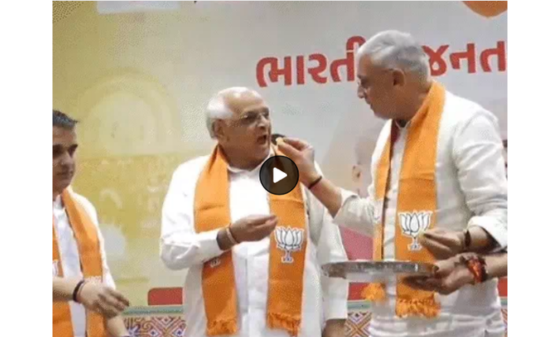
As per the final results, the BJP has maintained complete dominance by winning all 15 municipal corporations in the state. In municipalities, the party secured 78 out of 84, while the Indian National Congress managed to win only six. In district panchayats, the BJP emerged victorious in 33 out of 34 bodies, leaving just one for the opposition. Similarly, in taluka panchayats, the party won 253 out of 260 seats, while the remaining seats were shared between the Congress and the Aam Aadmi Party.
A notable development in these elections was seen in Amreli district, where the Aam Aadmi Party registered a historic win by capturing the Bagasara taluka panchayat, marking its first-ever control in a panchayat body. However, despite this isolated success, the party’s overall performance remained limited.
In Surat Municipal Corporation, where AAP had made significant gains in the previous elections by winning 27 seats in 2021, the party saw a sharp decline this time, managing to secure only four seats. The Congress was reduced to just one seat, while the BJP once again asserted its dominance by winning 115 seats and forming the government comfortably.
Political analysts attribute the BJP’s massive victory to its well-structured campaign strategy and strong grassroots presence. The election campaign was led with meticulous planning under the leadership of state party president Jagdish Vishwakarma, who focused on micro-management and extensive voter outreach. The party conducted door-to-door campaigns, organized group meetings, and held community interactions across districts and talukas to strengthen its connection with voters.
The BJP’s strategy also emphasized booth-level management and targeted voter engagement, ensuring maximum turnout and support. This comprehensive approach helped the party consolidate its voter base and secure a decisive mandate across urban and rural regions alike.
Following the results, Prime Minister Narendra Modi expressed gratitude to the people of Gujarat for their continued support. In his message, he stated that the victory reflects public trust in good governance and the developmental work carried out by the government. He assured citizens that the party would continue to work diligently and take Gujarat to greater heights in the coming years.
The election results clearly highlight the BJP’s continued political dominance in Gujarat and underline its strong organizational structure and voter connect. With a near-clean sweep across key local bodies, the party has reinforced its position as the leading political force in the state.