Noida International Airport Inaugurated by PM Modi, Boosts Connectivity
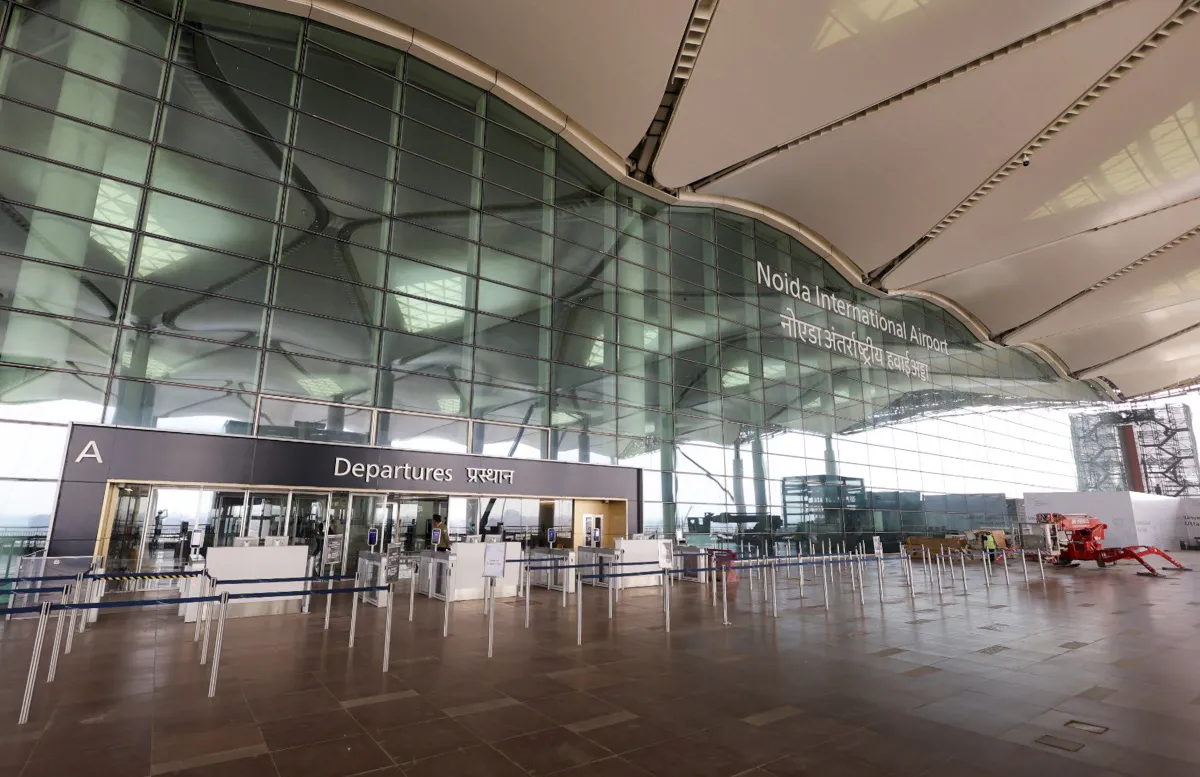
Noida International Airport: The much-awaited Noida International Airport is set to be inaugurated today by Narendra Modi, marking a major milestone in India’s aviation sector. Located in Noida, this greenfield airport is expected to significantly boost connectivity, trade, and economic growth across the region. This project is also seen as a crucial step in strengthening India’s ambition to become a global aviation hub. With increasing air travel demand in the country, this airport will play a major role in handling future passenger traffic and improving regional infrastructure.
A Major Boost for Delhi-NCR Aviation
The new airport will serve as the second major aviation hub in the Delhi-NCR region after Indira Gandhi International Airport. It is expected to reduce heavy congestion at IGI Airport and improve the overall travel experience for passengers. In its first phase, the airport will handle around 12 million passengers annually. Once fully developed in multiple phases, the total capacity will increase to 70 million passengers per year, making it one of the largest airports in India. Prime Minister Modi said the airport will not only improve travel convenience but also boost trade, tourism, and business activities in the region.
Investment and Development Details
The first phase of the airport has been developed with an investment of approximately ₹11,200 crore. It will operate under the airport code DXN and is being managed by Yamuna International Airport Pvt Ltd (YIAPL), a subsidiary of Zurich Airport International AG. The project is being developed under a public-private partnership (PPP) model, ensuring high-quality construction, global operational standards, and efficient management. This collaboration reflects India’s focus on modern infrastructure development with international expertise.
Modern Infrastructure and Facilities
The airport features a 3,900-metre-long runway capable of handling large wide-body aircraft, including long-haul international flights. It is equipped with advanced navigation systems such as Instrument Landing System (ILS) and modern airfield lighting, allowing smooth 24/7 operations in all weather conditions. A key highlight is its cargo infrastructure, which includes a multi-modal cargo hub with an integrated terminal capable of handling over 2.5 lakh metric tonnes annually. This capacity can be expanded up to 18 lakh metric tonnes in the future. Additionally, a dedicated 40-acre Maintenance, Repair, and Overhaul (MRO) facility will support aircraft servicing and generate employment opportunities.
Connectivity and Accessibility
The airport is directly connected to the Yamuna Expressway, ensuring fast and smooth access to Delhi, Greater Noida, Gurugram, and other important cities in western Uttar Pradesh. Authorities are planning to integrate operations between Delhi and Noida airports to create a seamless aviation network. This integration will help manage passenger load efficiently, reduce congestion, and improve connectivity across the NCR region.
Security and Arrangements
For the inauguration ceremony, strict security arrangements have been implemented. Around 5,000 security personnel have been deployed, and a five-layer security system has been put in place to ensure safety. Traffic restrictions have also been imposed in nearby areas to manage the movement of vehicles and avoid congestion during the event.
Architectural Design and Vision
The airport’s architectural design blends modern infrastructure with Indian cultural elements. Inspired by traditional ghats and havelis, it reflects a unique identity while maintaining global standards. The Uttar Pradesh government has described the airport as a game changer for the state’s economy. It is expected to boost sectors such as agriculture, logistics, trade, tourism, and employment generation, creating new growth opportunities.
Conclusion
The launch of Noida International Airport marks a major step forward in India’s infrastructure development. With world-class facilities, strong connectivity, and high passenger capacity, the airport is set to transform air travel and economic growth in the region. It will not only reduce pressure on existing airports but also strengthen India’s position as a leading global aviation hub.