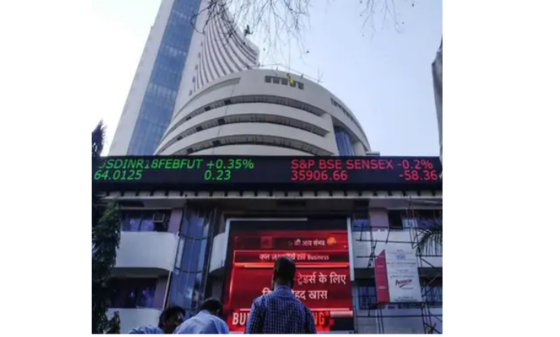
Sensex, Nifty Extend Losses as Crude Oil Nears $100
Mumbai, September 8, 2026: The Indian stock market came under heavy selling pressure on Tuesday, with benchmark indices extending their decline amid rising crude oil prices, escalating geopolitical tensions in West Asia and continued caution among investors.
The BSE Sensex fell 555 points, or 0.73%, to close at 75,577.58, while the Nifty 50 declined 144 points, or 0.61%, to settle at 23,635.10. The Nifty also slipped below the 23,650 mark and ended at its lowest closing level in nearly three months.
The market had already opened on a weak note. During early trading, the Sensex fell more than 380 points, while the Nifty dropped close to 100 points as investors reacted to the sharp rise in oil prices and growing uncertainty in global markets.
Why Is the Indian Stock Market Falling?
1. Rising Crude Oil Prices
One of the biggest concerns for investors is the sharp rise in crude oil prices.
Brent crude moved close to the $100-per-barrel level, raising concerns about India’s import bill and inflationary pressures. Since India remains heavily dependent on imported crude oil, a sustained rise in energy prices can put additional pressure on the country’s trade balance and corporate costs.
The increase in oil prices has been linked to heightened geopolitical risks in the West Asia region, adding another layer of uncertainty for global investors.
2. Rising Geopolitical Tensions
Growing tensions involving the US, Iran and the wider West Asia region have affected investor sentiment.
Concerns surrounding energy supplies and shipping routes have pushed crude prices higher and encouraged investors to move towards a more cautious approach. The uncertainty has also increased volatility across global equity markets.
For Indian equities, higher oil prices are particularly important because they can increase inflationary pressure and potentially influence monetary policy expectations.
3. Selling Pressure Continues
The latest fall also reflects the broader weakness that has been visible in Indian equities over recent sessions.
Both Sensex and Nifty have been under pressure, with the benchmarks falling for several sessions as investors remain cautious about global risks, crude prices and liquidity conditions. Reuters reported that both indices had already declined around 2.2% over the previous seven sessions before Tuesday’s fall.
Banking and Financial Stocks Under Pressure
Financial stocks were among the major contributors to Tuesday’s decline.
ICICI Bank, Axis Bank and other major financial names came under pressure, while several large-cap stocks also declined during the session. ICICI Bank, for instance, ended around 2% lower on Tuesday.
The weakness in banking and financial stocks added further pressure to the benchmark indices.
IT, Realty and Auto Stocks Also Weigh
Several major sectors remained under pressure during the trading session.
Early in the day, Nifty IT and Nifty Realty were among the weaker sectoral indices, while financial services, auto and oil & gas stocks also traded lower.
However, not every sector remained in the red. Defence and selected metal and media stocks showed relative strength during the session, highlighting the mixed nature of sectoral performance.
Nifty Drops to a Three-Month Closing Low
Tuesday’s decline has increased concerns about the near-term direction of the Indian market.
The Nifty 50 closed at 23,635.10, marking its lowest closing level in approximately three months. Analysts are now watching the 23,600–23,700 zone closely as an important area for the index.
A sustained weakness below key support levels could keep volatility elevated, while any improvement in global cues, crude prices or geopolitical conditions could provide some relief to investors.
What Investors Will Watch Next
Going forward, investors are likely to closely track crude oil prices, developments in West Asia, global interest-rate expectations, foreign institutional flows and upcoming economic data.
The possibility of higher global inflation caused by expensive crude oil remains a major concern. Market participants are also monitoring expectations around US monetary policy, which can influence global liquidity and emerging-market flows.
For now, the Indian equity market remains in a cautious phase, with geopolitical uncertainty and expensive crude oil acting as major headwinds.
Market Close at a Glance
- Sensex: 75,577.58
- Sensex Change: -555 points
- Nifty 50: 23,635.10
- Nifty Change: -144 points
- Nifty Closing Level: Lowest in nearly three months
- Major Concern: Rising crude oil prices
- Other Pressure Points: West Asia tensions, global rate expectations and selling pressure
The Bottom Line
The Indian stock market faced another difficult session on Tuesday as investors reacted to a combination of rising crude oil prices, geopolitical uncertainty and continued market-wide selling pressure.
With the Sensex falling more than 550 points and the Nifty slipping below 23,650, the focus now shifts to whether the benchmarks can stabilise around their key support levels or whether further volatility lies ahead.
Market figures are based on reported trading data and may be subject to revisions.