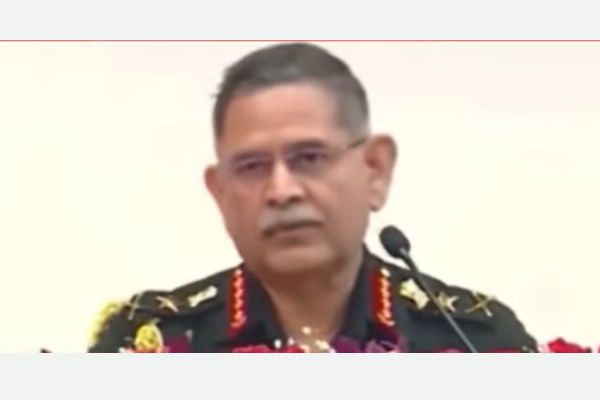
In a highly provocative statement delivered from American soil, Pakistan’s Army Chief General Asim Munir issued a nuclear threat against India, declaring that if Pakistan’s existence is ever threatened, it would not hesitate to use its nuclear arsenal—even if it means dragging half the world into devastation. His remarks have sparked global alarm, especially as tensions between the two nuclear-armed neighbors continue to simmer beneath the surface despite an official ceasefire.
General Munir’s comments, made during an undisclosed event in the United States, are being viewed as a deliberate attempt to internationalize the Kashmir issue and portray Pakistan as a cornered state under existential threat. His exact words, asserting that “if Pakistan’s survival is at stake, we will not hesitate to use nuclear weapons and take half the world with us,” have drawn condemnation and concern alike. Experts believe this could be part of Pakistan’s longstanding strategy of nuclear brinkmanship to pressure India and rally global support.
Reacting swiftly to Munir’s statement, United States Secretary of State issued a stark warning about the volatility in South Asia. He acknowledged that while the ceasefire agreement between India and Pakistan still officially stands, the ground realities suggest a fragile peace. “The potential for sudden escalation remains high. The ceasefire could break at any time,” the US diplomat warned, adding that the global community must remain vigilant and engage diplomatically with both sides.
A key point of friction remains the Indus Waters Treaty, with Pakistan expressing fear that India may attempt to restrict or block the flow of rivers as a form of retaliation. Islamabad has voiced its concerns to international bodies, claiming that India’s water strategy poses a strategic threat to Pakistan’s agriculture and economy. While India maintains its adherence to the treaty, it has also emphasized its right to utilize the full quota of water allocated under the agreement.
India, on its part, has not only dismissed the nuclear threats with strong diplomatic language but has also reiterated its zero-tolerance policy on terrorism emanating from Pakistani soil. Official sources in New Delhi confirmed that India has resolved not to let “blood and water flow together”—a symbolic but stern reminder that cross-border terrorism and cordial diplomacy cannot go hand-in-hand.
India has further called out Pakistan’s tactics as nuclear blackmail, asserting that it will not bend to such threats. “We refuse to be coerced by nuclear rhetoric. Peace is only possible when there is accountability, not when terrorism is used as a state policy,” said a senior Indian government official. He also stressed that the responsibility to prevent escalation lies squarely with Pakistan, which must dismantle terrorist infrastructure and abandon provocative posturing.
International observers are keeping a close watch on the situation, especially in light of rising global tensions and shifting geopolitical alliances. Analysts warn that a minor misstep or provocation from either side could snowball into a larger conflict with catastrophic consequences. The fear of nuclear escalation in South Asia is not just a regional concern but a global one.
As diplomatic channels work overtime behind the scenes, one thing is clear: peace in South Asia remains fragile. Until mutual trust is rebuilt and Pakistan abandons its policy of using terror and threats as leverage, the specter of conflict will continue to loom large over the subcontinent.