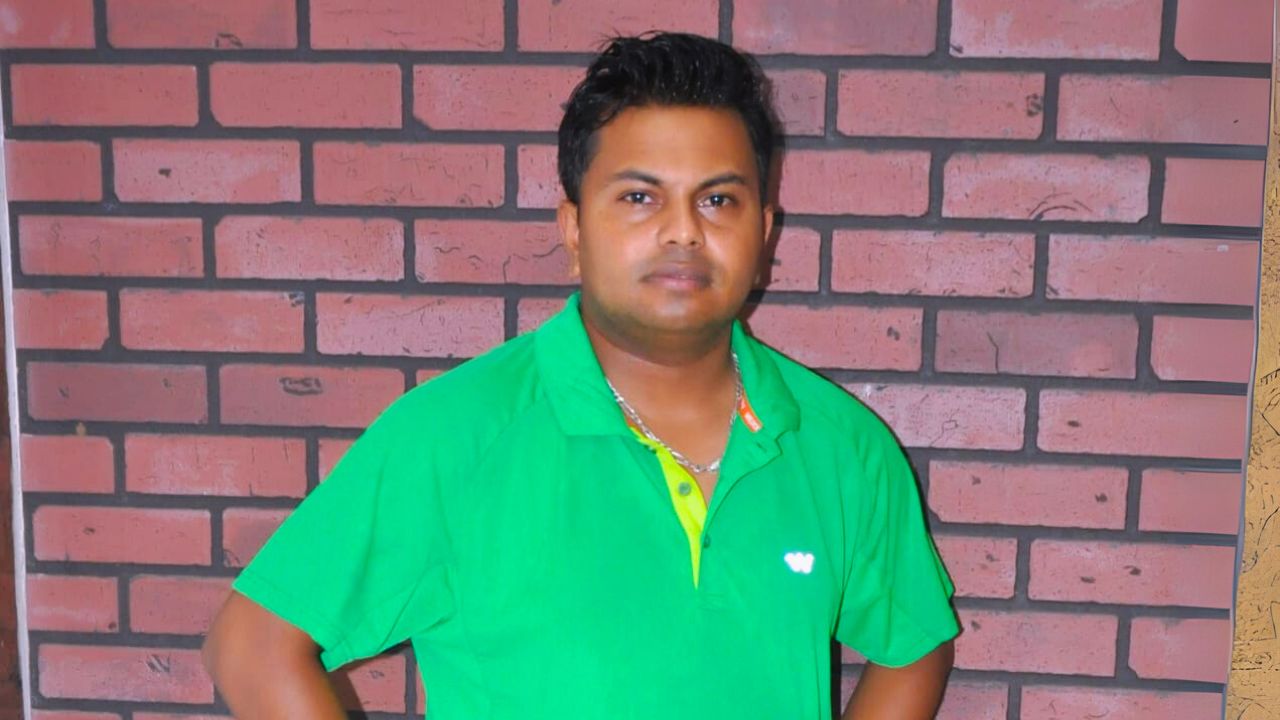
Mumbai: In the fast-paced world of table tennis, where most athletes live and breathe through one dominant hand, Kamesh Gareri stands apart. Known to many as “The Ambidextrous Coach”, he is one of the rare figures in Indian sport who can switch between right and left hands with equal confidence — a gift that has transformed his career and inspired the players he mentors.
A Journey Defined by Dual Strength
Table tennis has always been a game of precision, reflexes, and sharp strategy. Players usually spend years refining their craft with one hand, gradually building muscle memory that defines their entire playing style. For Kamesh, however, the story unfolded differently. Instead of confining himself to one side, he developed mastery with both hands, creating an unusual and powerful edge.
This dual ability didn’t emerge by accident. It was carefully cultivated under different mentors, each shaping one side of his game with unique approaches and values.
Learning the Left, Building the Right
On his left, Kamesh was guided by Vijay Sharathi, a respected former coach of the Indian national team. From Sharathi, he learned the art of finesse, mental discipline, and the tactical awareness needed to compete at the highest levels. His left-hand play carries that polish — a reflection of years of absorbing wisdom from a coach who had trained international athletes.
His right-hand journey was equally remarkable. Under B.C. Bania, a grassroots coach dedicated to nurturing local talent, and Lam Nonglait, who fine-tuned his basics, Kamesh built a foundation rooted in patience, work ethic, and consistency. This side of his training taught him the importance of persistence and the quiet strength required to build resilience.
By blending these two streams of learning, Kamesh found himself in a unique position: one player, two approaches, and endless possibilities.
A Coach Who Sees the Game Twice
What makes Kamesh special as a coach is not simply his ability to switch the paddle from one hand to the other, but his rare ability to see the game from both perspectives. He can visualize rallies from the left-hander’s point of view as well as from a right-hander’s angle. This gives him insights most coaches cannot replicate.
Players under his guidance often say that he anticipates problems before they arise. He knows the frustration of a weak return, the challenge of adjusting grip, or the thrill of surprising an opponent by suddenly switching angles. In practice sessions, this means he can step into the shoes of his students, offering practical solutions shaped by experience on both sides of the table.
Beyond Technique: A Way of Living
Over time, ambidexterity became more than a technical skill for Kamesh — it turned into a philosophy. His message to young athletes is simple yet powerful: adaptability is strength.
He often reminds them, “If one option doesn’t work, create another. If one hand feels weak, train the other. The game, like life, is never one-sided.”
This way of thinking has a deep impact on his students. They don’t just learn forehands and backhands; they learn how to be flexible, how to think differently, and how to bounce back from setbacks. Parents frequently observe that training with him improves not only their children’s sporting performance but also their outlook on challenges outside the game.
Inspiring Indian Table Tennis
Kamesh Gareri now coaches hundreds of youngsters, spreading his philosophy of balance and resilience. His students are taught to respect both the fundamentals of the game and the creative freedom to experiment.
In a country where cricket often takes center stage, his dedication to table tennis is a reminder that smaller sports, too, have the power to change lives and inspire communities. With every training camp, every practice match, and every word of encouragement, Kamesh is sowing the seeds of a stronger, more versatile generation of athletes.
Redefining the Sport
Ambidexterity may be rare, but in Kamesh’s hands it has become a symbol of possibility. His approach challenges traditional ways of teaching and invites players to explore beyond their limits. For Indian table tennis, he represents innovation, perseverance, and a vision for the future.
The title “The Ambidextrous Coach” is more than a nickname — it is a recognition of a man who chose to see the game differently, live it fully, and share it generously with the next generation.
As Indian table tennis continues to grow, figures like Kamesh Gareri remind us that greatness is not always about winning medals, but about redefining the way the game is played, taught, and understood.