Ali Khamenei Killed in US-Israel Strikes on Tehran Compound
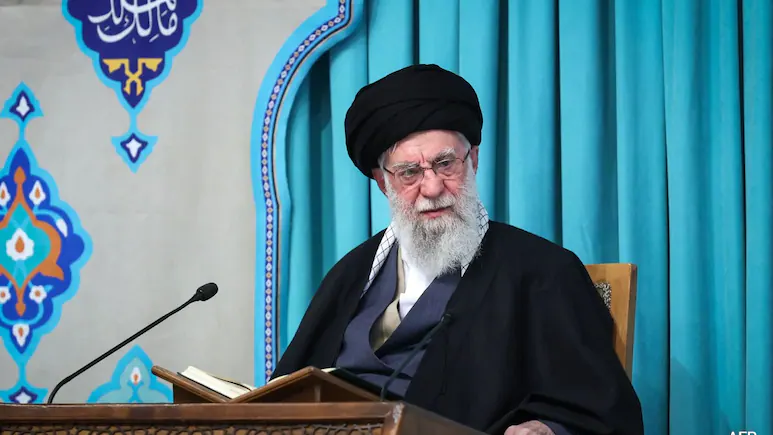
Iran’s Supreme Leader Ali Khamenei killed in joint airstrikes carried out by the United States and Israel, according to Iranian state media. The 86-year-old leader reportedly died early Saturday morning after his compound in Tehran was targeted during large-scale military operations.
State broadcaster Islamic Republic of Iran Broadcasting (IRIB) confirmed the news on Sunday, announcing, “The Supreme Leader of Iran has reached martyrdom.” Reports said Khamenei was killed inside his office when missiles struck the compound. Iranian state television said his death at his workplace showed that he stood at the forefront of his responsibilities until the end.
The strikes were part of what US President Donald Trump described as a major joint operation with Israel. According to US and Israeli officials, the attack targeted key Iranian military and government sites in Tehran and other areas. Israeli media reported that Prime Minister Benjamin Netanyahu was shown an image of Khamenei’s body after it was recovered from the destroyed compound.
The killing of Khamenei marks one of the most dramatic events in the history of the Islamic Republic. He had ruled Iran since 1989, holding ultimate authority over the government, military, and judiciary. His assassination could create major political uncertainty in Iran, especially since no clear successor had been publicly named.
Trump Announces Death
President Trump confirmed Khamenei’s death in a post on X and Truth Social. He called it “the single greatest chance for the Iranian people to take back their country.” Trump said the operation was carefully planned and carried out in close coordination with Israel.
According to Trump, US intelligence agencies had been tracking Khamenei’s movements for some time. Advanced surveillance and monitoring systems reportedly made it possible to locate him inside his compound. Trump stated that “there was not a thing he, or the other leaders that have been killed along with him, could do.”
He also warned that US bombing operations would continue if necessary, saying the goal was to ensure peace in the Middle East and prevent Iran from developing nuclear weapons.
However, shortly after Trump’s announcement, a post appeared on Khamenei’s official X account. Written in Persian, the message created confusion and raised doubts about the earlier reports. Still, Iranian state media later firmly confirmed his death.
Other Leaders Reportedly Killed
According to international media reports, several other senior Iranian officials were also killed in the strikes. These reportedly include Defence Minister Amir Nasirzadeh and Revolutionary Guards commander Mohammed Pakpour. Israel’s military said five additional senior commanders were confirmed dead, including Ali Shamkhani, an adviser to the Supreme Leader.
Iranian media also reported that members of Khamenei’s family, including his daughter and son-in-law, were killed during the attack. These reports have not been independently verified.
Iran’s Response and Future Uncertainty
Iran has called the strikes illegal and unprovoked. In response, missiles were reportedly launched at Israel and at countries hosting US military bases in the Gulf region. Sirens were heard in parts of Israel as air defense systems intercepted incoming threats.
The assassination of Khamenei, who had led Iran for more than three decades, could lead to a power struggle within the country. As Supreme Leader, he controlled key institutions and shaped Iran’s domestic and foreign policy. He maintained a strong anti-Western stance and resisted calls for reform throughout his rule.
Khamenei first rose to power after the death of Ruhollah Khomeini, the founder of the Islamic Republic. Although initially seen as a weak successor, Khamenei gradually strengthened his authority and became one of the most powerful figures in modern Iranian history.
His death leaves Iran at a critical moment. Political uncertainty, possible protests, and continued military conflict could shape the country’s future in unpredictable ways. The region now faces heightened tensions as the world watches how Iran’s leadership and its people respond to this historic event.