US and Israel Strike Iran as Iran Responds with Missiles
US and Israel Strike: The United States and Israel have launched major air and missile strikes across Iran, including in the capital city of Tehran. US President Donald Trump described the action as “major combat operations.” The attacks come during ongoing tensions over Iran’s nuclear and ballistic missile programmes.
Israel first announced on Saturday morning that it had carried out missile strikes on Iranian targets. Soon after, a US official confirmed that the attacks were part of a joint military operation between Israel and the United States. In recent weeks, the US had moved a large number of fighter jets and warships into the region. Reports say this is the biggest US military buildup in the Middle East since the Iraq War.
Where Have the Attacks Taken Place?
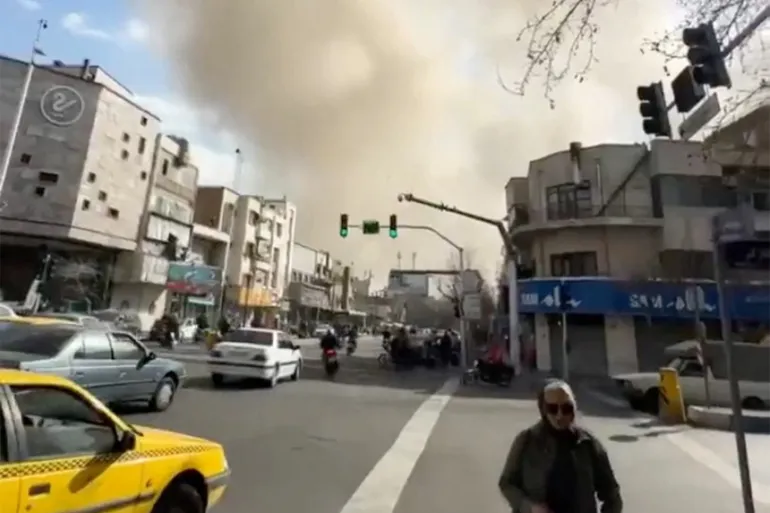
Several areas inside Iran were hit during the strikes. In Tehran, missiles reportedly struck University Street and the Jomhouri district. Explosions were also reported near the headquarters of the Islamic Revolutionary Guard Corps (IRGC), one of Iran’s most powerful military forces.
According to reports, a strike also occurred near the offices of Iran’s Supreme Leader, Ali Khamenei. Explosions were heard in northern parts of Tehran, including the Seyyed Khandan area.
Other Iranian cities were also targeted. Local media reported blasts in Kermanshah, Qom, Tabriz, Isfahan, Ilam and Karaj. Explosions were also reported in Lorestan Province. The full extent of the damage is not yet clear.
The strikes come after weeks of growing threats between Washington and Tehran. Tensions had already been high due to disagreements over Iran’s nuclear activities and missile development.
Iran’s Response
Iran has responded quickly. The Israeli military confirmed that Iran launched missiles toward Israel soon after the attacks. Sirens were heard in several parts of Israel, especially in the north. Explosions were seen and heard as Israel’s air defense systems worked to intercept incoming threats.
The Israeli military said that the public should follow instructions from the Home Front Command. It added that the Israeli Air Force was operating to intercept missiles and strike any further threats when necessary.
Iranian officials had earlier warned of strong retaliation. Ebrahim Azizi, head of the national security commission of Iran’s parliament, threatened a “crushing” response on social media. He wrote that the United States and Israel had started down a path whose end was no longer under their control.
The situation remains tense, and both sides appear ready for further action.
Where Are Iran’s Leaders?
It is not clear where Supreme Leader Ali Khamenei is at this time. The 86-year-old leader has not been seen in public for several days as tensions increased. Reports say that roads leading to his compound in central Tehran were closed by authorities after the explosions began.
Meanwhile, Iran’s official news agency reported that President Masoud Pezeshkian is safe and unharmed. A source from the presidential office said he was not injured in the attacks.
Growing Regional Risk
The joint strikes by the United States and Israel mark a serious escalation in the conflict. With Iran now launching missiles in response, fears are growing that the situation could develop into a wider regional war. Neighboring countries are closely watching events as military forces on all sides remain on high alert.
The coming days will be critical in determining whether the conflict expands further or if diplomatic efforts can reduce tensions. For now, the region remains on edge as both sides prepare for possible next moves.