After 144 Days, Weir-Cum-Causeway Reopens as Tapi River Level Drops Below Danger Mark
In a major development for Surat’s daily commuters, the Weir-Cum-Causeway connecting Katargam and Rander has finally been reopened for vehicular movement after remaining closed for 144 consecutive days. The causeway, which often remains at risk during the monsoon due to rising water levels in the Tapi River, had crossed the danger level of 6 meters earlier this year. With the river level now receding to 5.56 meters, authorities have allowed traffic to resume on the long-awaited route.
The reopening brings significant relief to thousands of residents who were forced to take lengthy detours for months. The causeway, built at a cost of ₹31 crore, has been a crucial connecting point between two densely populated regions. However, its structural integrity has been a recurring concern, as it has undergone repairs worth nearly ₹14 crore in the past, yet continues to weaken year after year.
The causeway was first closed on June 23 when the Tapi River touched the danger mark. It was briefly reopened on August 11 after water levels dipped, but within just seven days, the river once again surged past 6 meters, forcing authorities to close it for the second time. With continuous rainfall and heavy river flow, the causeway remained shut throughout most of the monsoon season.
Across the monsoon months, the closure timeline paints a concerning picture: 8 days in June, 31 in July, 25 in August, 30 in September, 31 in October, and 20 days in November. Even though the water level has now decreased, experts warn that the structural health of the causeway has deteriorated further due to prolonged water pressure and erosion.
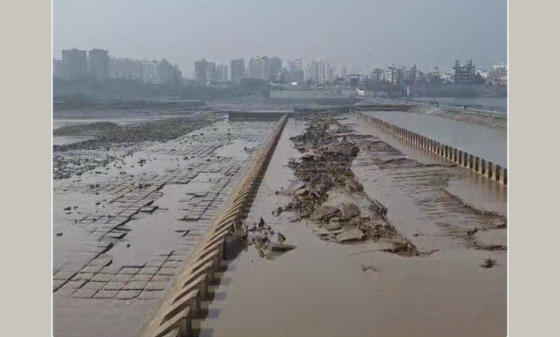
One of the most serious issues is the impact on the RCC structure on both sides of the causeway. Continuous water flow during the season has caused fresh erosion downstream, exposing parts of the foundation and leaving visible cracks and damaged sections. The upstream and downstream damage has raised concerns about future safety, especially if the strengthening plan is not executed promptly.
Interestingly, the Surat Municipal Corporation had previously announced a major strengthening plan after observing severe damage post last year’s monsoon. The plan included a comprehensive structural survey by national-level agencies to identify vulnerabilities and recommend long-term repairs. However, despite the high importance of the project, the plan has remained stuck on paper due to bureaucratic delays, survey approvals, and decision-making slowdowns.
Nearly a year has passed since the proposal was drafted, but no concrete action has been taken. As a result, the damage has expanded significantly this monsoon. New erosion downstream has created a larger breach, increasing the risk to both commuters and the structure itself.
The current drop in water level has made the downstream damage even more visible. Large cavities and washed-out sections highlight how vulnerable the causeway has become. Despite repeated warnings and public petitions, authorities have yet to initiate the strengthening work, raising serious concerns about safety.
Experts stress that the causeway is not just a transportation link but a critical component of Surat’s water regulation system. If strengthening is not undertaken before the next monsoon, the causeway may face severe structural failure, potentially disrupting transportation and posing hazards to local residents.
With the causeway now open, the immediate inconvenience for commuters may have ended, but the long-term threat remains. Unless authorities prioritize and fast-track the strengthening project, Surat may face an even bigger problem in the coming monsoon seasons.