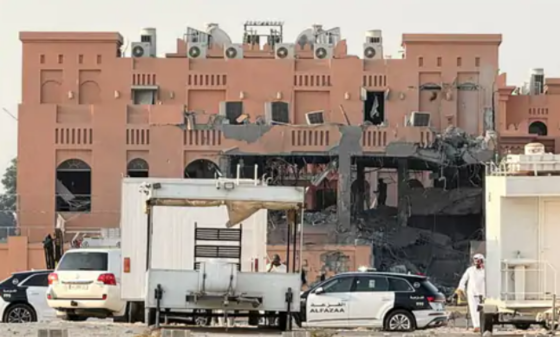
Israel Airstrike on Qatar’s Capital Doha: Hamas Chief Khalil Al-Hayya Escapes, 6 Killed; PM Netanyahu Takes Responsibility
On Tuesday, multiple powerful explosions shook the Qatari capital, Doha, as the Israeli military carried out a series of airstrikes targeting senior Hamas leaders. The operation was part of Israel’s escalating efforts against Hamas, marking one of the most significant strikes outside of Israeli-Palestinian borders in recent years.
The Israeli Defense Forces (IDF) officially announced that they targeted top Hamas leadership locations, specifically aiming at Khalil Al-Hayya, one of the senior leaders of the organization. According to media reports, although the primary target, Al-Hayya, survived the attack unharmed, at least six individuals lost their lives in the assault. These casualties included lower-ranking Hamas operatives and security personnel present at the targeted locations.
In a rare and bold move, Israeli Prime Minister Benjamin Netanyahu publicly accepted full responsibility for the strike, emphasizing that the operation was carried out with precision and with the aim of dismantling what he described as the “deep-rooted terror network” operating within Qatar. Netanyahu stated that Israel holds Hamas fully accountable for attacks conducted on Israeli soil, particularly referencing the deadly October 7, 2023 attacks that resulted in mass casualties and hostage situations.
This military action unfolded during critical moments when Hamas leaders were engaged in discussions regarding a US-brokered ceasefire proposal. The timing of the attack sent shockwaves through international diplomatic circles, as it risked derailing sensitive negotiations aimed at reducing tensions between Israel and Palestinian factions.
An Israeli official confirmed to the Associated Press that the precision strike targeted hidden Hamas facilities in Doha. The operation forms part of Israel’s intensified strategy to neutralize Hamas leadership globally, not only in Gaza but also in locations abroad. Israeli Army Chief of General Staff Eyal Zamir had previously indicated that foreign-based Hamas leaders would be targeted as well. On August 31, he declared, “Most of the Hamas leadership resides outside Palestine, and we will reach them.”
Qatar has long been known as a haven for displaced Hamas leaders and a diplomatic intermediary in the Israel-Palestine conflict. Doha’s strategic role as a mediator had already placed it in a delicate position. The strike complicates its neutrality, especially as it hosted several clandestine meetings focused on securing a ceasefire and negotiating the release of hostages held by Hamas.
Following the airstrike, Qatar’s Ministry of Foreign Affairs, represented by spokesperson Majid Al-Ansari, strongly condemned the Israeli military action. He described the attack as a “cowardly aggression”, asserting that it violates all principles of international law and diplomatic norms. Al-Ansari emphasized that targeting political leadership on foreign soil undermines global peace efforts and further destabilizes the region.
On the other side, Israeli Finance Minister Bezalel Smotrich praised the action as a firm and necessary response to terrorism. Posting on platform X (formerly Twitter), Smotrich lauded the IDF and Shin Bet’s “precise targeting and correct decision-making,” claiming that “terrorists will never find refuge from Israel’s long arm, no matter where they hide in the world.”
This attack signifies a sharp escalation in Israel’s military tactics, extending beyond Gaza and the West Bank to international locations. Analysts suggest that Israel aims to send a clear message to Hamas that its leadership will not enjoy safe havens anywhere, including in Gulf countries. The focus on Khalil Al-Hayya stems from his prominent role in organizing attacks and coordinating Hamas’s strategic decisions over the years.
International reactions remain mixed. While some nations empathize with Israel’s right to self-defense, others condemn the violation of Qatari sovereignty. The United Nations has urged both parties to exercise restraint and prioritize dialogue to prevent further bloodshed. Meanwhile, humanitarian agencies warn that such acts may trigger another wave of regional instability, complicating humanitarian efforts already strained by the prolonged conflict.
In the backdrop, the geopolitical balance in the Middle East is under renewed pressure. Qatar’s unique position as a diplomatic intermediary now appears threatened, potentially weakening ongoing ceasefire negotiations. Hamas leaders are likely to be more secretive and decentralized, making future operations more complicated.
As the global community watches closely, Israel stands firm in its stance that its military campaign is crucial to neutralize imminent threats posed by Hamas leaders operating beyond its borders. The Doha strike not only highlights the long-standing hostility between Israel and Hamas but also raises critical questions about the future of peace efforts in the region.