DBFOT–HAM PCT management can build the facility. Only citizens can sustain the dignity.
There’s a quiet revolution happening in India’s cities — and it isn’t about gleaming metros or glassy skyscrapers. It’s about something far more basic, far more human, and far more revealing: public toilets.
Under the DBFOT–HAM model, Public Convenience Toilets (PCTs) are designed, built, operated, and maintained through structured agreements and performance-based service delivery. On paper, the ecosystem is engineered for reliability.
But here’s the uncomfortable truth:
Even the best system fails when people don’t respect it.
Because what breaks public toilets isn’t only plumbing.
It’s psychology.
If we want PCTs to remain hygienic, safe, and dignified, the strongest driver isn’t only technology, O&M, or enforcement.
It’s citizen behaviour — shaped by mindset, habits, and social norms.
A Toilet Is Not Just Infrastructure — It’s a Civic Mirror
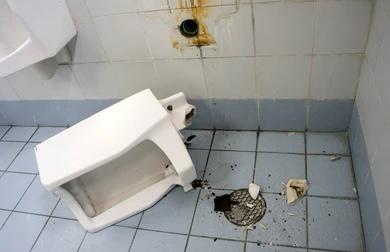
Public conveniences are the most honest reflection of a city’s civic maturity. A clean toilet tells you citizens respect shared spaces. A dirty, broken facility tells you something else: that people see public property as nobody’s property.
And that is exactly where cities lose.
Not in construction.
In culture.
But culture doesn’t change through slogans alone. It changes when we understand why people behave the way they do — and how to shift those behaviours.
The Psychological Truth: Why People Misuse Public Toilets
1) The “Not Mine” Effect
When people feel no ownership, they act carelessly.
Psychologically, public spaces often suffer from what is called the diffusion of responsibility — everyone assumes someone else will take care of it.
Result: people litter, spit, misuse fixtures, and walk away.
Fix: Make ownership personal.
If you use it, you own it.
2) The “Broken Window” Chain Reaction
There’s a powerful behavioural pattern: when a space looks neglected, people treat it worse.
One stain becomes two.
One broken tap becomes five.
One dirty corner becomes “this whole place is dirty anyway.”
This is called the broken window effect — poor conditions invite poorer behaviour.
Fix: Keep toilets consistently clean and quickly repair damage — because cleanliness itself discourages misuse.
And citizens must stop “adding to the mess.”
3) The Herd Mindset
People copy behaviour they see around them.
If others litter, a new user thinks it’s normal.
If others flush and keep it clean, that also becomes normal.
Public toilets are shaped by social proof — the idea that “this is how people behave here.”
Fix: Citizens must set the standard.
One responsible user influences many.
One irresponsible user corrupts many.
4) The Shame-Avoidance Trap
Ironically, some people avoid toilets because they fear judgement — especially women, adolescent girls, and children.
A poorly maintained toilet triggers anxiety:
• fear of dirty surfaces
• fear of being watched
• fear of harassment
• fear of embarrassment
So people stop using toilets, and the city loses sanitation safety.
Fix: Citizens must protect toilets as dignity spaces — clean, safe, and respectful — so everyone feels secure using them.
5) The “I Paid Nothing, So I Care Less” Bias
When a service feels “free,” people often undervalue it. It’s a cognitive bias.
If citizens don’t see a cost, they don’t see a consequence.
Result: misuse, vandalism, careless behaviour.
Fix: Visible messaging on maintenance costs can improve respect — because people treat value seriously when they understand it.
The Citizen’s Role: Small Actions, Massive Consequences
Citizen responsibility doesn’t require grand gestures. It requires standards.
Use it right.
PCTs are not dumping sites.
Bottles, wrappers, cloth, plastic — they don’t belong in pans and urinals. Misuse blocks systems, forces shutdowns, and increases O&M costs.
Leave it clean.
Flush properly.
Don’t spit.
Don’t litter.
Use the bin.
This isn’t about cleaning for the operator. It’s about respecting the next person — a stranger with the same right to dignity.
Don’t vandalise.
Breaking taps, damaging doors, stealing fittings — this isn’t mischief. It’s self-sabotage. Every damaged asset creates repair delays and service downtime.
Respect safety and decency.
Public toilets must feel safe for women, children, elderly citizens, and persons with disabilities. Harassment, intimidation, smoking, or disorderly behaviour makes toilets unusable for the people who need them most.
Report issues early.
If there’s no water, poor hygiene, broken fittings, or unsafe behaviour — report it through QR code feedback systems. Responsible citizens don’t only criticise; they trigger improvement.
Why Citizen Responsibility Matters: The PESTEL Reality
Political
Public toilets shape trust in governance. Clean facilities build confidence. Dirty toilets become public outrage — even when misuse caused the deterioration.
Economic
Misuse increases O&M costs. Blockages and damage mean repeated repairs, downtime, and lower service quality. Irresponsibility burns money — and the public ultimately pays.
Social
Clean toilets protect dignity, reduce open defecation, improve public health, and make cities safer for women and children.
Technological
Sensors, CCTV, mechanised cleaning, QR code feedback systems — all help. But technology cannot outwork bad behaviour. Citizens must match technology with discipline.
Environmental
Water wastage, drain blockages due to pampers, sanitary pads, overflows, chemical overuse — all rise when toilets are misused. Responsible use reduces waste and improves environmental outcomes.
Legal
Vandalism, harassment, theft — these are offences. Citizen behaviour directly affects safety compliance and operational discipline.
The Citizen Code: Six Rules for a Clean City
- Use the toilet correctly
2. Flush and keep it clean
3. Dispose waste only in bins
4. Never vandalise or steal
5. Respect staff and other users
6. Report problems early
These aren’t “extra.”
They’re the minimum standards of a city that respects itself.
The Final Word: Clean Toilets Are a Shared Signature
DBFOT–HAM can build toilets.
Concessionaires can maintain them.
Authorities can supervise them.
But only citizens can keep them functional in the long run.
Sanitation isn’t just a Municipal Corporation/ Government responsibility. It’s a civic responsibility — and a psychological one.
Because a public toilet survives not on concrete alone, but on mindset.
And the city is not judged by what it constructs.
It is judged by what its people respect.
Cleanliness isn’t a clause in a contract.
It’s a culture in citizens.